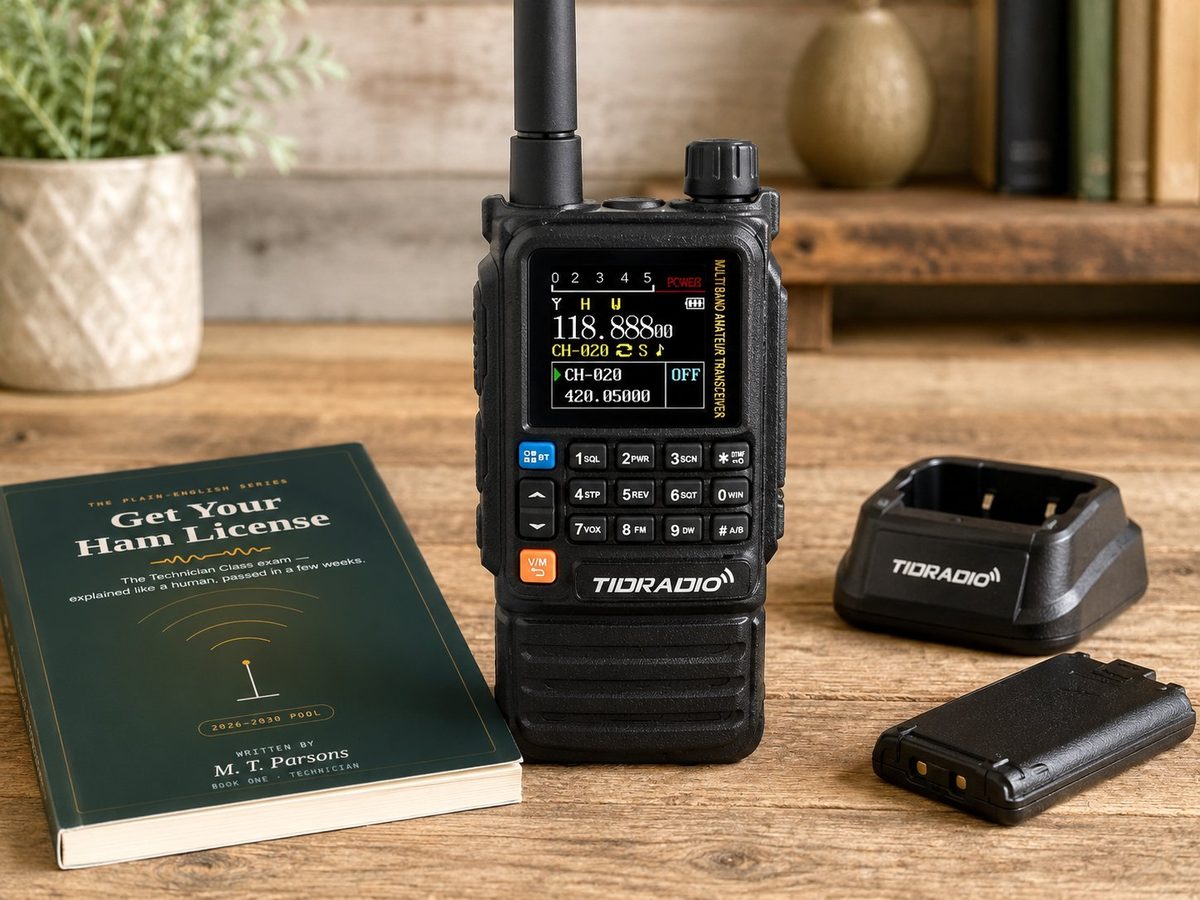
Ham radio has a reputation for being technical and intimidating. It doesn’t have to be. At its heart, amateur radio is simply a way to talk to other people — across town or across the country — without depending on cell towers, the internet, or the power grid. For preparedness, that independence is the whole point.
When a disaster knocks out phones and internet, ham radio keeps working. Amateur operators routinely pass emergency traffic when nothing else is up. It’s the deepest, most resilient layer of a family communication plan.
FRS, GMRS, and ham: where ham fits
You’ve probably used the simplest radios already:
- FRS (the walkie-talkies in blister packs) — no license needed, but low power and short range.
- GMRS — more range and the ability to use repeaters; needs a $35 FCC license that covers your whole family for 10 years, with no exam.
- Amateur (ham) radio — the most capable: far more range, more frequencies, and the ability to build and experiment. It requires passing a license exam — which is more approachable than people expect.
Getting licensed (it’s easier than you think)
The entry-level U.S. license is the Technician class. The exam is 35 multiple-choice questions drawn from a public pool — the exact questions and answers are published, so you can study the real thing. Most people pass after a few evenings of focused study with the right material. There’s a small exam fee and a one-time FCC fee, and your call sign is then valid for 10 years.
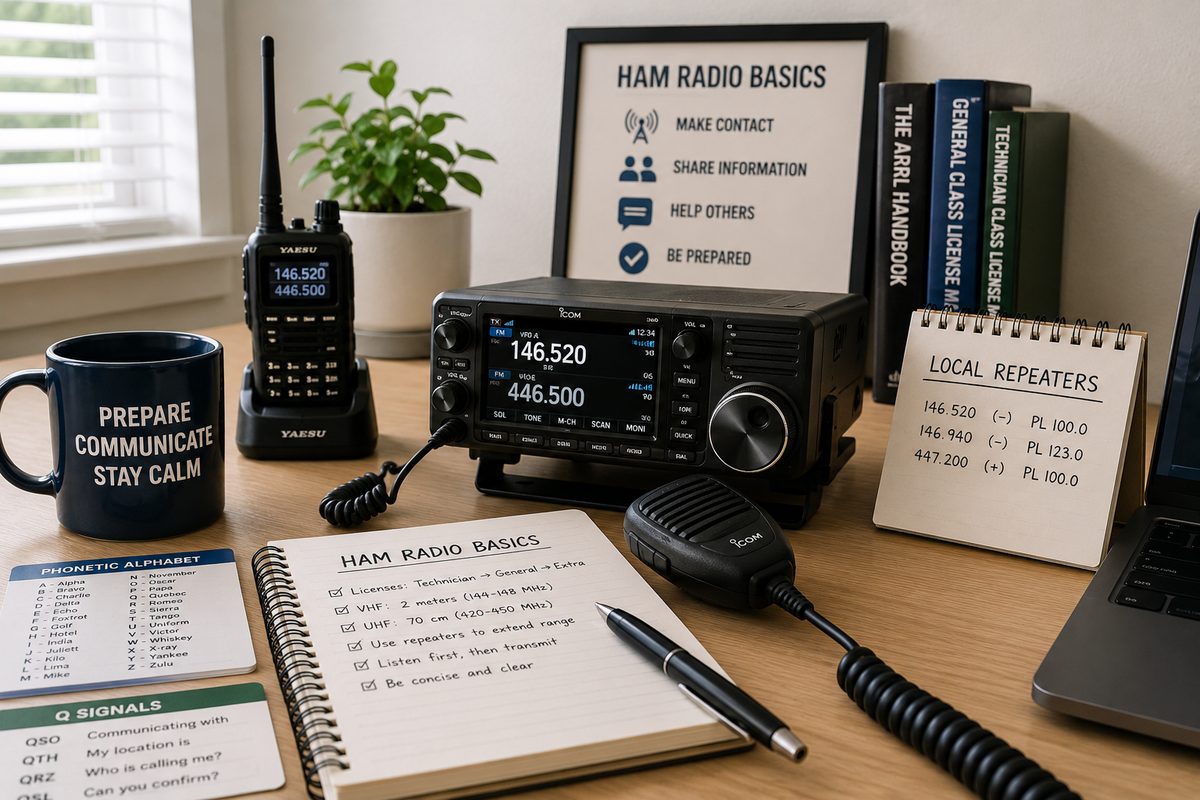
A Technician license gives you full access to the VHF and UHF bands — the 2-meter (144–148 MHz) and 70-centimeter (420–450 MHz) bands — which are exactly what you want for regional and local emergency communication.
You need a license to transmit on the ham bands — it’s the law, and it exists so the bands stay usable for everyone. You can listen all you want without one, but get licensed before you key up. (The one exception: in a genuine life-threatening emergency, anyone may use any means to call for help.)
Your first radio
Start with an inexpensive handheld (an “HT”). A sub-$30 Baofeng is the classic first radio — not because it’s the best, but because it’s cheap enough to learn on without worry. Once you’re hooked, nicer handhelds from Yaesu, Icom, and others are easier to use and more durable. A base or mobile radio with a better antenna dramatically extends your range when you’re ready.
Repeaters: how you reach across town
Handhelds are low-power, so two of them might only reach a mile or two directly (“simplex”). Repeaters — receivers on tall towers or hilltops that rebroadcast your signal — extend that to a whole region. Most areas have a public list of local repeater frequencies. The national 2-meter calling frequency, 146.520 MHz, is a good simplex starting point.
Gear to get started
Heads up: the gear links below are affiliate links. If you buy through them we may earn a small commission, at no extra cost to you. We only suggest gear we'd actually use. Full disclosure.
 Basic ham handheld radio A practical handheld for local repeaters, simplex, and emergency-comms basics after you get licensed. See current price
  NOAA weather alert radio No license needed — a reliable way to hear weather alerts when phones are unreliable. See current price
 Skip the textbook slog — the study method I actually recommend. Learn more →
A simple path in
Here’s the whole on-ramp: download a free Technician study app, study a few evenings, pass the exam, get your call sign, buy a cheap handheld, and find a local club or net to practice with. Hams are famously welcoming to newcomers. Within a month you can go from “that seems complicated” to keying up your first contact — and adding the most resilient communication layer there is to your family’s plan.
73 (that’s ham for “best wishes”) — and welcome.