If you do only one preparedness project this year, make it water. It’s the thing you can’t go more than a few days without, it’s the first utility to become unreliable in a disaster, and it’s remarkably cheap to store. The hard part isn’t cost or complexity — it’s just getting around to it.
Store at least one gallon per person, per day — half for drinking, half for cooking and hygiene. Aim for a 3-day supply at minimum, and work toward two weeks as your goal. Don’t forget pets.
How much, really
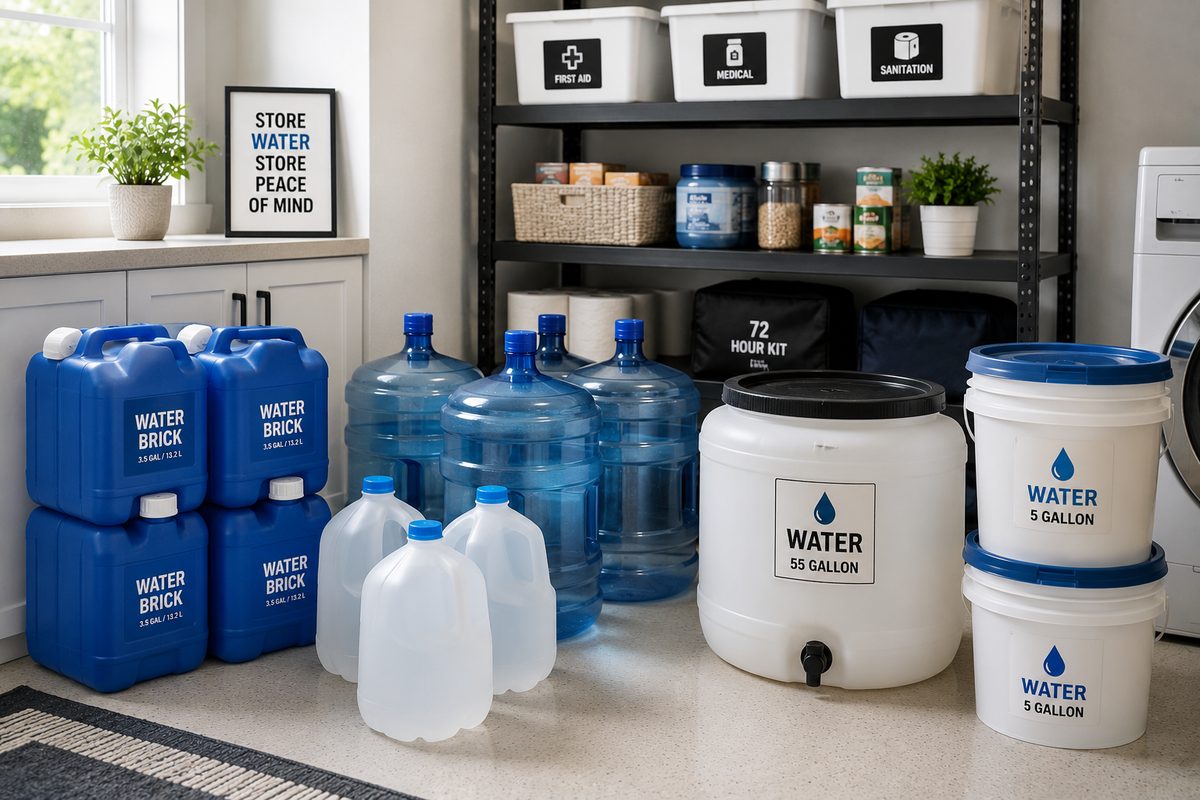
One gallon per person per day is the long-standing FEMA and Red Cross guideline. For a family of four, that’s 12 gallons for three days, or about 56 gallons for two weeks. Adjust up for hot climates, nursing mothers, and the sick. It sounds like a lot until you see it stacked in a corner — then it just looks like peace of mind.
What to store it in
- Commercially bottled water — the simplest, safest option. Sealed, dated, and ready. A few cases under a bed counts.
- Stackable water containers (“water bricks”) and 5- to 7-gallon jugs — durable, modular, and easy to move and rotate.
- Larger barrels (15–55 gallon) — the most water per dollar, but heavy and stationary; you’ll want a pump or spigot.
Use food-grade containers made for water. Don’t reuse old milk jugs (they’re hard to fully clean and break down), and keep containers off bare concrete on a shelf or board.
Keeping it fresh
Commercially sealed water lasts a long time unopened — check the date and rotate it through. Water you bottle yourself from a safe tap should be swapped out about every six months. Store it cool, dark, and away from gasoline, pesticides, or other strong chemicals, whose vapors can permeate plastic over time.
Tie it to the clocks changing each spring and fall: empty and refill your tap-filled containers, and replace anything past its date. Pair it with your kit check so it’s one small habit, twice a year.
A backup way to treat water
Storage covers the short term; for anything longer, have a way to make water safe. A good gravity filter handles day-to-day clean water for a household with no pumping, and unscented household bleach or water purification tablets can disinfect in a pinch (follow current EPA guidance on quantities). Boiling is the reliable fallback when you have heat.
Our picks
Heads up: the gear links below are affiliate links. If you buy through them we may earn a small commission, at no extra cost to you. We only suggest gear we'd actually use. Full disclosure.
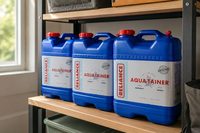 Stackable water containers Pre-fill and store water in containers that fit real closets, shelves, and corners. See current price
 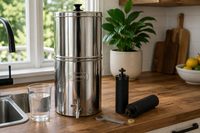 Gravity water filter A household-friendly backup for boil-water notices or longer disruptions after stored water runs low. See current price
 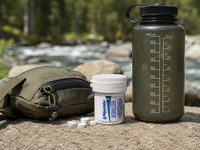 Water purification tablets A last-layer backup when stored water, boiling, or filtering isn't available. See current price
 Just start
You don’t need the perfect system. Buy a few cases of bottled water this week and put them in a closet. Add a couple of stackable containers next month. Within a season you’ll have a two-week supply and the single best return on any prep dollar you’ll spend.