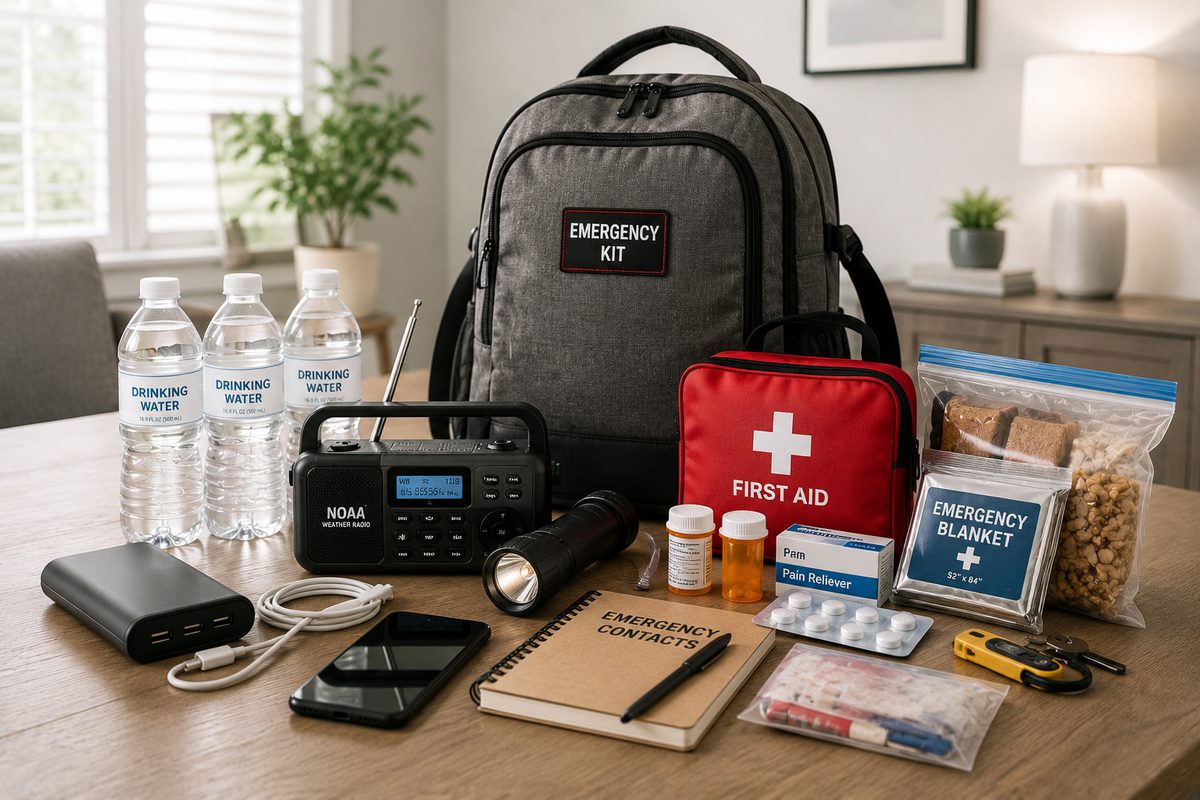
A “72-hour kit” is exactly what it sounds like: the supplies to keep your household going for three days if help is delayed and stores and services are down. That’s the window most disasters fall into. The good news is you probably already own half of it — building a kit is mostly about gathering and organizing, not buying everything new.
Build it for your household — your people, your medications, your pets. A perfect generic kit that ignores your family’s real needs isn’t a good kit.
The core checklist
Start here. These are the categories that matter most:
- Water — one gallon per person per day, so three gallons each, minimum. (More on this in our water storage guide.)
- Food — three days of shelf-stable food that needs little or no cooking: canned goods, peanut butter, granola/protein bars, dried fruit, nuts. Don’t forget a manual can opener.
- Light — a headlamp or flashlight per person, plus spare batteries.
- First aid — a stocked kit and any prescription meds. See our family first-aid kit guide.
- Information — a battery or hand-crank NOAA weather radio so you’re not blind when the phone dies.
- Power — a charged power bank for phones; a larger power station if budget allows.
- Warmth & shelter — emergency blankets, a change of warm clothes, sturdy shoes.
- Documents — copies of IDs, insurance, and a written contact list in a zip bag.
- Cash — small bills; card readers go down with the power.
- Sanitation — hand sanitizer, wet wipes, trash bags, any personal hygiene needs.
Build it room by room, not store by store
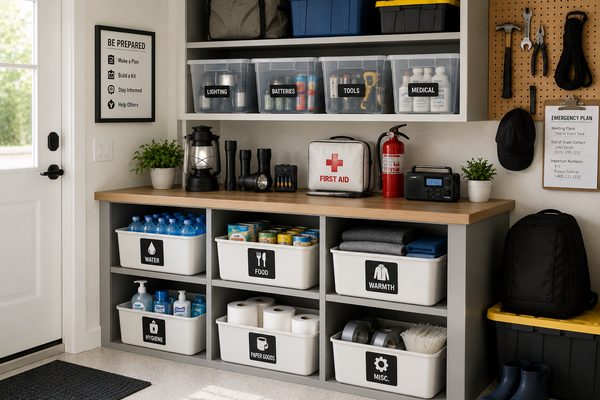
Walk through your home with a box. Kitchen: canned food, can opener, water. Bathroom: meds, first aid, hygiene. Hall closet: flashlights, batteries, blankets. You’ll fill most of the kit in twenty minutes. Then make one short shopping list for the gaps — usually a weather radio, extra water containers, and a power bank.
Two kits, two jobs
Keep a stay kit at home (the bulk of your supplies) and a smaller go bag by the door in case you have to leave quickly. The go bag is a slimmed-down version: water, snacks, a flashlight, a charged power bank, copies of documents, meds, and a change of clothes.
A few things worth buying
Heads up: the gear links below are affiliate links. If you buy through them we may earn a small commission, at no extra cost to you. We only suggest gear we'd actually use. Full disclosure.
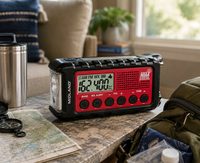 NOAA weather alert radio No license needed — a reliable way to hear weather alerts when phones are unreliable. See current price
 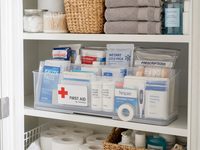 Stocked first-aid kit A well-organized base kit for home, personalized with your family's medications, allergies, and needs. See current price
 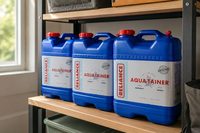 Stackable water containers Pre-fill and store water in containers that fit real closets, shelves, and corners. See current price
 Maintain it twice a year
A kit you build and forget slowly goes stale — batteries die, water ages, kids outgrow clothes. Tie a quick check to the clocks changing each spring and fall: rotate water and food, test the radio and flashlights, and update documents. Fifteen minutes, twice a year, keeps the whole thing ready.
That’s the entire project. Not scary, not expensive — just gathered, organized, and maintained. Start here if you want a guided path.